
Artex
Artex removal on the Wirral
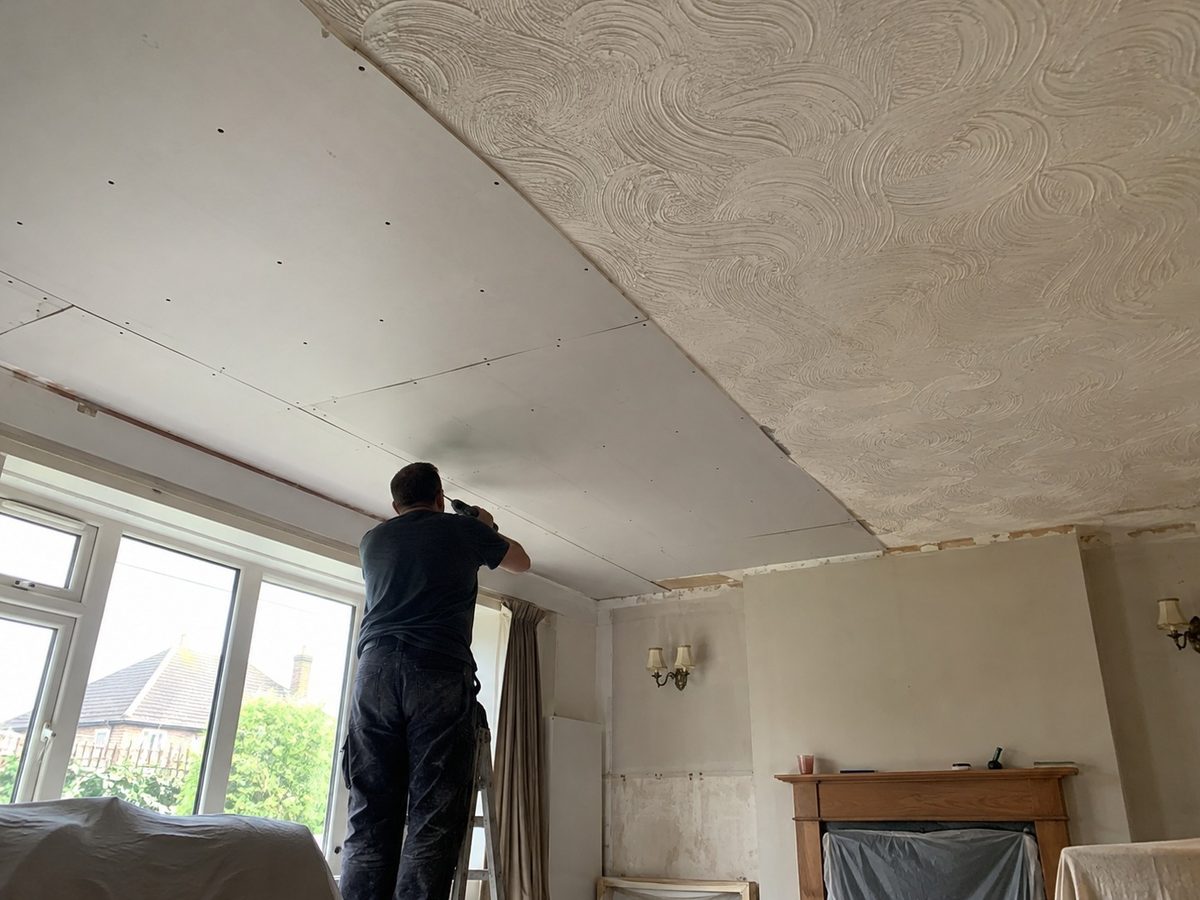
Artex ceilings and walls taken back to a flat surface you can paint. Covered rather than scraped, and there is a reason for that which is worth knowing.
- Written quote
- Drying days given up front
- Floors covered first
Artex removal
Why it gets covered rather than scraped
Artex applied before the mid nineteen eighties can contain asbestos fibres. Left alone and sealed under a surface it is not doing anything. Scraped, sanded or broken up dry, it can release fibres into the air you are standing in. That single fact decides the method on most Wirral ceilings, because a great deal of this housing was artexed in exactly that period.
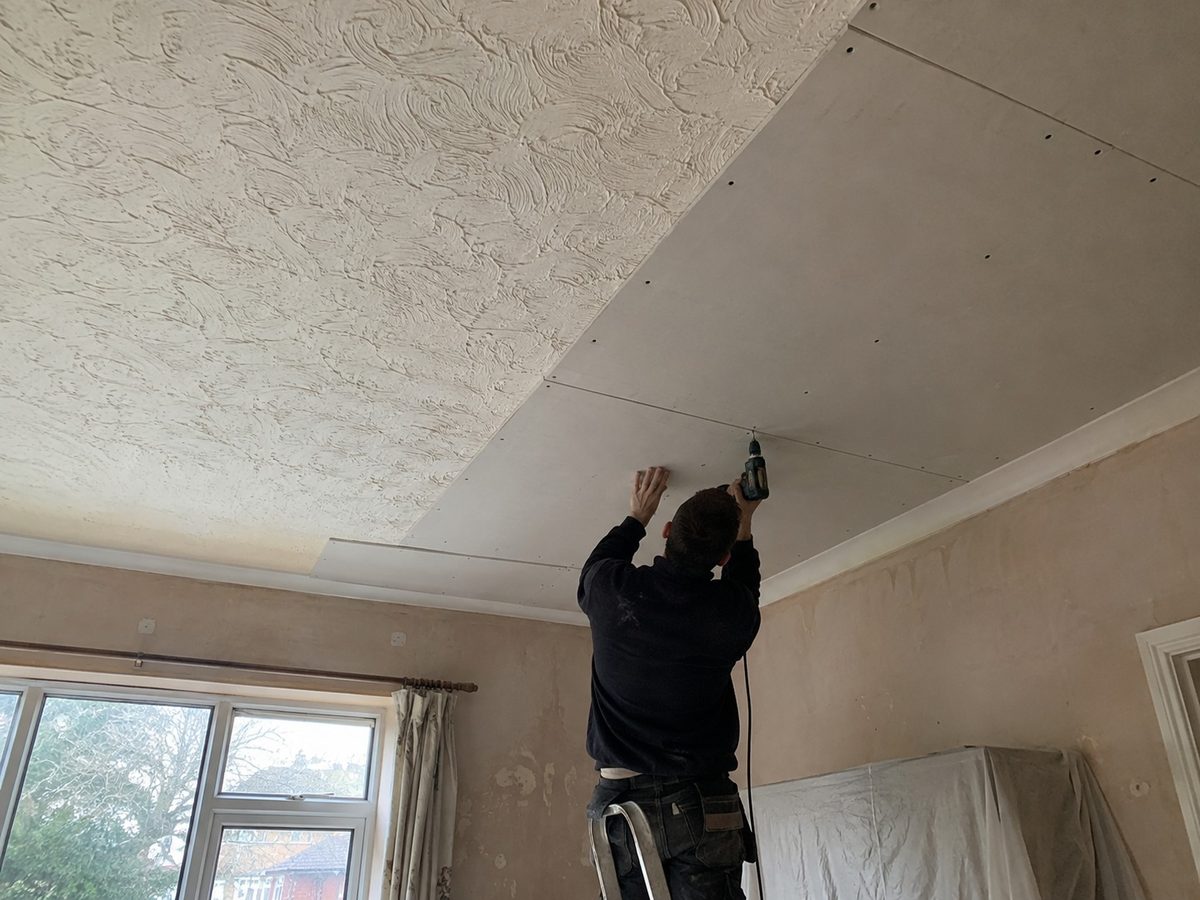
So the normal answer is to cover it. Where the pattern is shallow the ceiling is bonded and skimmed, which takes it flat in two coats without disturbing anything. Where the pattern is heavy, swirled or has peaks, overboarding gives a better flat and is often no dearer than fighting the texture with filler and bonding.
If you want it genuinely removed rather than covered, that starts with having it tested, and if it is positive it is a licensed removal job and not ours. We will tell you that rather than take the job. For the great majority of ceilings, covering it is the right answer and nobody is compromising anything by choosing it. Often asked about alongside plasterboarding and dry lining, external rendering and k rend and silicone render.
Get a price for the artex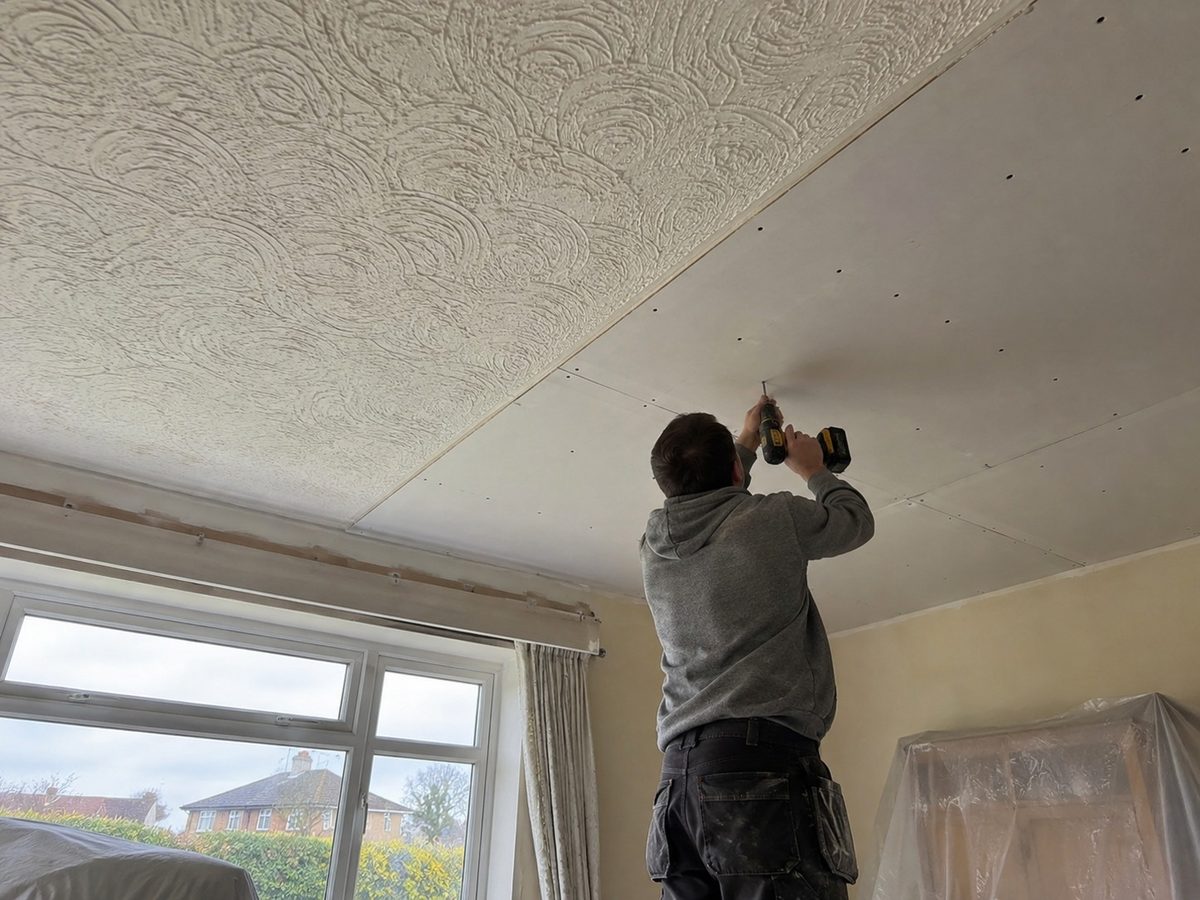
Pre mid eighties can contain asbestos fibres. That is why covering is the default and why nobody should be dry sanding your ceiling.
Shallow swirls bond and skim. Heavy peaks and ridges are usually better overboarded, and the cost difference is smaller than people expect.
A lath ceiling with artex on it is two questions at once, and the lath answer comes first.
Done across Greasby, and everywhere else on the peninsula.
Artex removal on the Wirral
What this job looks like
Example images of the kind of work described, each one labelled as such. They are not photographs of our own jobs and nothing here is borrowed from anybody else's. Our own photographs go in as jobs are finished and customers are happy for us to use them.
Why people use us
How it is done
Nothing is scraped dry and nothing is sanded. The surface is sealed and covered, or boarded over.
- Pattern depth assessed before the method is chosen
- Bonded and skimmed, or overboarded, never dry scraped
- Room covered and waste bagged
- Flat finish ready for a mist coat
Frequently asked questions
Artex removal: the questions people ask
The ones that come up most. If yours is not here, ring and ask.
Does my artex contain asbestos?
It might if it went up before the mid nineteen eighties, and the only way to know for certain is a test by somebody who does that. It is also largely beside the point for the work we do, because covering it does not disturb it either way, which is exactly why covering is the default.
Can you just scrape it off?
We will not dry scrape or sand artex of unknown age, and nor should anybody else. If you want it genuinely removed, it gets tested first, and a positive result makes it a licensed removal job that is not our trade.
Is skimming over artex as good as a new ceiling?
On a sound ceiling with a shallow pattern, the finished result is a flat paintable ceiling and you cannot tell afterwards. On a deep pattern, overboarding gives a better flat than trying to bury the peaks.
How many coats does it take?
Usually a bonding or base coat to take the pattern out, then a finish coat over it. A very heavy pattern can need more, which is the point at which boarding becomes the better value answer.
Done across Greasby, and everywhere else on the peninsula.
Send a photo of the ceiling
A picture taken with a light to one side shows the pattern depth, which is what decides between skimming and boarding.
About Wirral Plastering
How the work is actually organised
Wirral Plastering takes the job as main contractor and puts the labour on it. That means one person quotes it, one person is answerable for it, and you are not chasing three numbers to find out who is coming on Tuesday.
It is worth saying plainly rather than implying a van and a family name, because the way a job is run changes what you can expect from it. What you get is a written scope, a date, and somebody whose problem it is if the date moves.
What we will tell you we are not
Damp proofing is a different trade and so is stone repair, and both come up constantly on Wirral housing. We do the plastering that follows damp work and the lime render that sits around stone, and we will tell you when the thing you are describing needs somebody else first.
Structural work is the same. A crack that runs in a line rather than a map pattern is not a plastering question and filling it is not an answer.
No photographs of our work, and why the site says so
There are no job photographs on this site. The slots are placeholders and they are labelled as placeholders. Nothing here is a stock picture presented as a job and nothing is borrowed from another company's gallery.
Real photographs go in as jobs are finished and customers are happy for us to use them, and not before. The same goes for anything that looks like a customer quote. There is a section built and ready for them, switched off, and it stays that way until there are real ones with permission attached.
Get in touch
Tell us what the wall or ceiling is doing and roughly how much of it there is. A photograph on the form answers half the questions before anybody rings you back.
- Phone0151 453 8836
- Emailcontact@wirralplastering.com
- WhatsAppSend us a photo of the job
- Based inWirral, Merseyside
- HoursMon to Fri 8 to 6, Sat 8 to 2, closed Sunday